The aim of mathematical modelling is to equip policy makers with additional evidence to guide their decision-making.
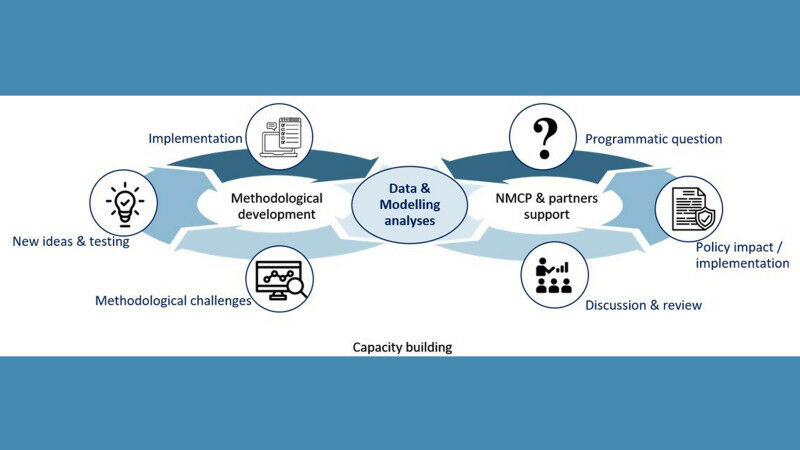
The aim of mathematical modelling is to equip policy makers with additional evidence to guide their decision-making. Over the past two decades, substantial progress has been made in reducing the global burden of malaria through vector control interventions and improved access to diagnosis and treatment. Despite this progress, much work still lies ahead. To address this, Swiss TPH has launched a new 3-year modelling project to support National Malaria Control Programmes with their decision-making on malaria control efforts. Great achievements have been made in the fight against malaria, saving more than eight million lives and preventing over one-and-a-half billion malaria cases. However, one billion people still live at risk of this preventable and treatable disease, which costs a child's life every two minutes. Swiss TPH has launched a new mathematical modelling project, funded by the Bill and Melinda Gates Foundation, to support National Malaria Control Programmes (NMCPs) in their global strategies as well as to provide direct support to countries to maximize the impact of malaria control efforts.
TO READ THIS ARTICLE, CREATE YOUR ACCOUNT
And extend your reading, free of charge and with no commitment.