Wikimedia Commons
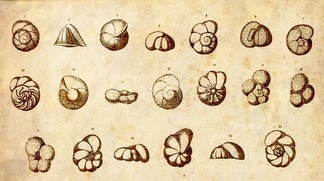
New insights into the growth dynamics of minuscule marine organisms could help put the study of Earth's climate, both present and prehistoric, on a more solid footing. For hundreds of millions of years, the tiny shells of single-celled marine organisms called foraminifera have been accumulating on the ocean floor. Their shells contain clues about the composition of the seawater they lived in. In a recent cooperation between EPFL and the Alfred Wegener Institute , researchers lay out a new explanation for how these organisms take up the elements they use to grow their shells, offering climatologists a better understanding into a common tool to study the Earth's climate history. Their Scientists often rely on secondary evidence, from ice or sediment cores, to reconstruct the prehistoric climate. Studying sediment cores containing foraminifera, scientists have reconstructed temperature timelines and analyzed the planet's ice cover based on the composition of the shells. But as coauthor Anders Meibom explains, because they are the result of complex biological processes, foraminifer from sediment cores cannot be interpreted easily using data from inorganically formed minerals.
TO READ THIS ARTICLE, CREATE YOUR ACCOUNT
And extend your reading, free of charge and with no commitment.