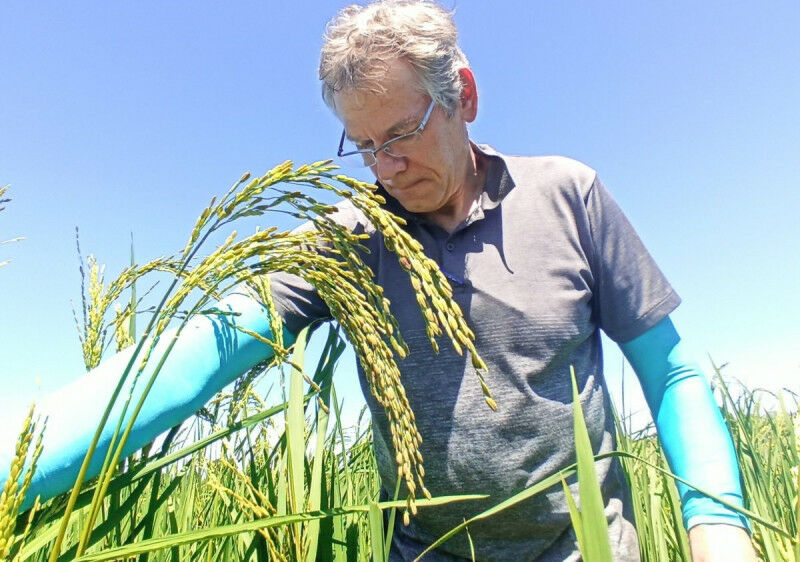
 Matthias Wissuwa in a field of the new rice variety Matrivika
Matthias Wissuwa in a field of the new rice variety Matrivika © Gabriel Schaaf all'images in original size . A new variety of rice that is adapted to life in low-phosphorus soils, that contains an exceptionally large amount of zinc and that was developed specifically for the conditions in Madagascar where it is grown, has recently been certified in the country. The variety was created under the leadership of plant scientist Professor Matthias Wissuwa from the Japan International Research Center for Agricultural Sciences (JIRCAS) and the PhenoRob Cluster of Excellence at the University of Bonn which he joined as a visiting professor in spring 2023, together with the Africa Rice Center and the National Centre of Applied Research for Rural Development in Madagascar (FOFIFA) Professor Wissuwa's research focuses on developing plant varieties with improved nutrient use efficiency and stress tolerance, specifically on abiotic stress factors such as phosphorus deficiency, iron toxicity, drought and salt stress. His research team makes targeted use of genetic resources from gene banks all'over the world to harness the natural genetic variation present in old traditional cultivars for its stress tolerance research and to apply its findings to modern, high-yield varieties. One property in particular was a priority when creating the new variety, known as Mavitrika. "The variety was developed specifically to strive in low-phosphorus conditions, because Malagasy soils contain very little of it," Matthias Wissuwa explains.
TO READ THIS ARTICLE, CREATE YOUR ACCOUNT
And extend your reading, free of charge and with no commitment.
Your Benefits
- Access to all content
- Receive newsmails for news and jobs
- Post ads


