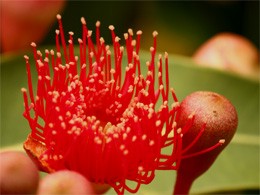
Crimson flowering gum (Corymbia ficifolia). Photo by Kate
Native vegetation must be restored to protect Australia's unique ecosystems from the impacts of climate change, according to scientists from the Australian National University. A review published this week in the international, peer reviewed journal Climatic Change , found that large-scale restoration of native vegetation was the most frequently recommended action in the scientific literature to counter climate change effects on biodiversity. Lead author, Don Driscoll from the Fenner School of Environment and Society at the ANU, said protection of biodiversity needed to be included in any government policy on climate change. "Reducing the area of native vegetation cleared is the most important action to take. But in areas that are already over-cleared, revegetation is essential.” "It is pleasing to see that some of the Government's climate change policies are directed at reducing the threat that climate change poses to native plants and animals by allocating carbon tax revenue to restoration and landscape-scale planning. 'Carbon revenue provides a realistic means of funding revegetation. But climate change policy must also include safeguards that ensure biodiversity is protected, in addition to providing financial disincentives for emitting carbon.' Driscoll said the review identified additional policies that would lead to faster reduction in the risks to biodiversity.
TO READ THIS ARTICLE, CREATE YOUR ACCOUNT
And extend your reading, free of charge and with no commitment.