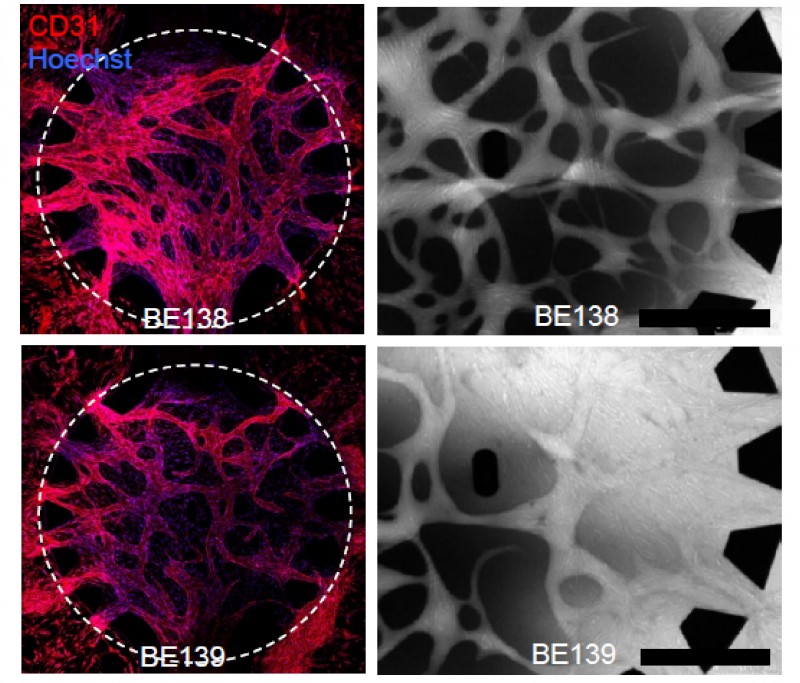
 Fluorescence microscopy images of blood vessels supported by perivascular cells. The top row shows vessels with perivascular cells from normal lung tissue compared to vessels supported by tumor-derived perivascular cells (bottom row). The vessels on the bottom show a higher leakage.
Media releases, information for representatives of the media Media Relations (E) A study from Bern University Hospital in collaboration with the University of Bern shows that so-called perivascular-like cells from lung tumors behave abnormally. They not only inadequately support vascular structures, but also may actively modulate the inflammatory and immune response. These findings may represent a novel stromal cancer target. Lung cancer accounts for the highest number of cancer-related deaths, with an estimated 1.6 million deaths in 2012 worldwide. Among different types of lung cancer, non-small cell lung cancer (NSCLC) is the most prevalent. Recent advances in genetic analyses led to targeted treatments that work very effectively in cases where tumors carry a specific targetable mutation. Another promising strategy focuses on redirecting the immune response to recognize and attack tumor cells.
TO READ THIS ARTICLE, CREATE YOUR ACCOUNT
And extend your reading, free of charge and with no commitment.
Your Benefits
- Access to all content
- Receive newsmails for news and jobs
- Post ads