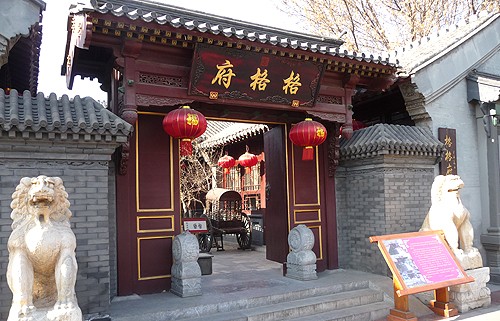
Traditional courtyard houses in China are under threat from modernisation, says Dr Paul Jones.
Paul Jones writes from China about how urbanisation is affecting heritage neighbourhoods and public spaces. Recently a University of Sydney planning alumni, now based at the School of Architecture at Tianjin University, invited me to experience firsthand the juggernaut of China's booming urbanisation phenomena. Sally Wang, who returned to China after graduating from the University of Sydney, asked me to visit her colleagues and share my experiences of heritage planning in Australia and explore opportunity for research collaboration. Located some 300 kilometers south east of Beijing, Tianjin is China's sixth most populous urban centre, with an estimated population of some 15 million. Like Beijing it is a bustling city dominated by new construction sites and a mosaic of high rise offices and residential buildings. As new areas are master planned, often on a site-by-site basis, a recurring challenge cited by Chinese academics and practitioners is ensuring these individually-planned developments become vibrant and usable spaces for people to enjoy. In an era of modernity, when many of the new buildings and spaces look and feel the same, neighbourhoods can struggle to achieve strong identities and a sense of place.
TO READ THIS ARTICLE, CREATE YOUR ACCOUNT
And extend your reading, free of charge and with no commitment.