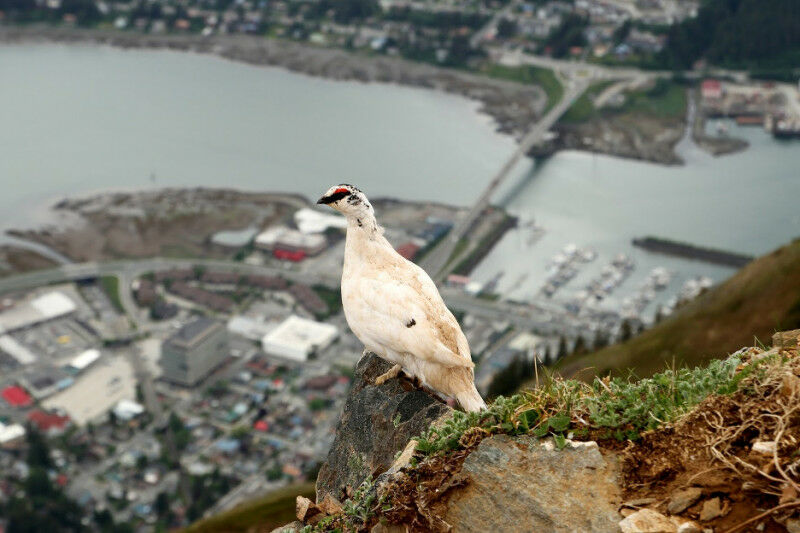
Human activities and infrastructure, such as cities and roads, may reduce future options for species as they need to move to keep pace with climate change. Shown is a willow ptarmigan above a port city. Photo: Chris Sergeant.
Human activities and infrastructure, such as cities and roads, may reduce future options for species as they need to move to keep pace with climate change. Shown is a willow ptarmigan above a port city. Photo: Chris Sergeant. As the need to address climate change becomes increasingly urgent so too does the concurrent need for proactive stewardship of the Earth's rapidly changing biosphere, according to research published today in the journal Science. -There is actually a lot we can do to help systems cope with oncoming climate change,- says Simon Fraser University biology professor and author Jonathan Moore, who with University of Washington professor Daniel Schindler, reviewed and assessed the potential benefits of forward-looking approaches. -From restoring connectivity to reducing local stressors to conserving future habitats-all of these proactive approaches can help the ecosystems that we rely upon to adapt to climate change. With that in mind, in order for species and ecosystems to adapt and be resilient it is critical to move beyond preservation-oriented approaches and include those that enable ecological change, Schindler notes.
TO READ THIS ARTICLE, CREATE YOUR ACCOUNT
And extend your reading, free of charge and with no commitment.