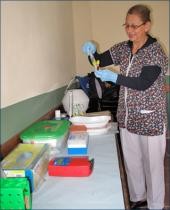
A nurse on Kordas' research team, Delma Ribeiro, gets ready to separate serum from blood, which will be used for analysis of iron status.
Most scientists see members of their research team on a daily basis, but not Kasia Kordas. Kordas, an assistant professor of nutritional sciences at Penn State, has always been interested in working internationally and helping other institutions improve their own research programs. For four years she has been building up a research program in Montevideo, Uruguay, and the majority of her research takes place there today. Stationed at the Catholic University of Uruguay, researchers in Kordas' lab study the effect of iron deficiency and lead toxicity on behavioral and cognitive development in children. Although iron and lead have had a major impact on the lives of people in Uruguay, very little research has been done in this area. Kordas wanted to change this, so she assembled an interdisciplinary team that pulls together researchers from chemistry, toxicology and psychology. The research examines the impact of iron and lead in 6- and 7-year-old children from low-income areas of Montevideo.
TO READ THIS ARTICLE, CREATE YOUR ACCOUNT
And extend your reading, free of charge and with no commitment.