Research lays foundation for new era of electronics
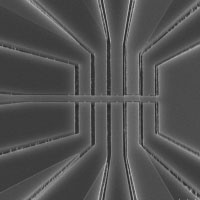
Physicists from the Hitachi Cambridge Laboratory, the University of Cambridge and other institutes have successfully developed technology to enable the control and detection of spin current in a similar way to electric current. Semiconductor electronic devices such as those used for information processing and data storage are based on detecting a basic attribute of an electron, its "charge". The technology developed uses a more recent concept based on another basic attribute, the electron's elementary magnetic moment, the so-called "spin," and is opening the door to a new era of spintronics. The results of this study were published . Andy Irvine, one of the researchers on the project, from the Cavendish Laboratory, commented on their findings: "Conventional semiconductor chips use electronic charge as a means of storing and passing digital information, but this approach runs into fundamental problems as devices get smaller. Using instead the 'spin' property of the electron allows us to imagine a new breed of device, with the potential for long data storage times, small size and low power, as well as strategies to realise very new concepts like quantum computing. "A drawback of using spin in semiconductors is that the transfer, detection and manipulation of spin information has always been very difficult to achieve, typically relying on inefficient magnetic contacts.
TO READ THIS ARTICLE, CREATE YOUR ACCOUNT
And extend your reading, free of charge and with no commitment.