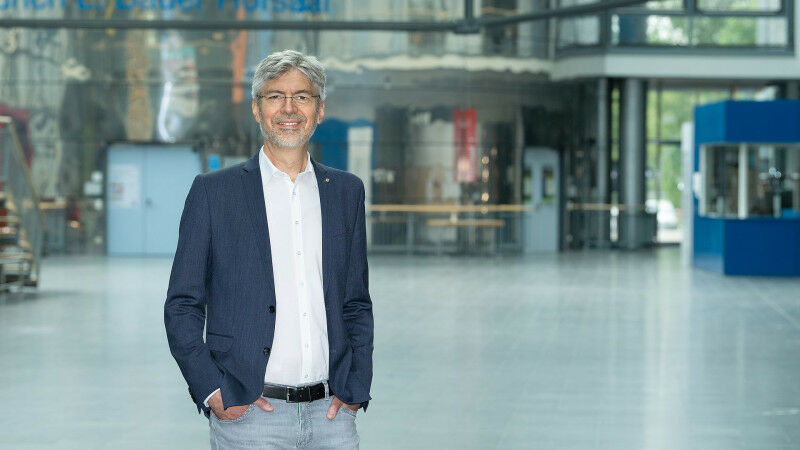
TUM professor Alin Albu-Schaeffer’s goal is to make robots ’slightly better than humans’ step by step.
Wide-ranging research on embodied intelligence at TUM. TUM professor Alin Albu-Schaeffer's goal is to make robots 'slightly better than humans' step by step. A robot can be as small as a pill or as big as a (self-driving) car. It can look like a person or fly like a drone. "A robot," says Angela Schoellig, Humboldt Professor at the Technical University of Munich (TUM), "is the continuation of what humans have been doing since the Stone Age: developing tools to perform tasks faster and better." At TUM, many researchers at the global forefront of their fields are addressing a wide range of challenges in robotics. From food services and nursing care to the retail sector: the shortage of trained personnel is making itself felt in everyday life. What could be more obvious than having robots take on certain tasks in these areas? Take a restaurant, for example: a robot stands behind the counter, keeps an eye on new customers, goes to the table when they are ready to order, takes the order and passes it on. It serves meals and drinks, chats with the guests and finally brings the check. For Prof. Daniel Rixen, this scenario misses the point: "Do we really want a robot that looks human?" asks the professor at the Chair of Applied Mechanics at TUM. "Or do we want a machine of some kind that replaces or improves on the functions that a human performs?" Cameras could keep an eye on people in a restaurant, notice when they want something and take their orders using a microphone built into the table. And: Do the drinks and meals actually have to be carried to the table by a humanoid robot?
TO READ THIS ARTICLE, CREATE YOUR ACCOUNT
And extend your reading, free of charge and with no commitment.