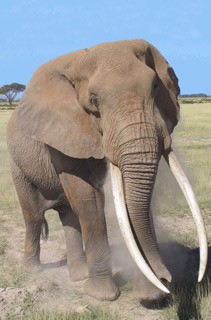
Male elephants of breeding age -- over 28 years old -- make up more than 5 percent of well-protected populations. Where populations have been over-exploited, this percentage declines to 1 percent or less. Males that resemble Amboseli National Park’s "Tolstoy" are unlikely to live to pass on their genes for large tusks. (Photo: Joyce Poole)
Male elephants of breeding age - over 28 years old - make up more than 5 percent of well-protected populations. Where populations have been over-exploited, this percentage declines to 1 percent or less. Males that resemble Amboseli National Park's "Tolstoy" are unlikely to live to pass on their genes for large tusks. (Photo: Joyce Poole) The fate of many African elephants, according to a group of scientists, hinges on a decision to be made this week in Qatar by a host of countries operating under an international agreement. The countries, part of the Convention on International Trade in Endangered Species (CITES), are gathering to decide, among other proposals, whether to grant requests to Tanzania and Zambia to lower the protection status of their elephants, allowing them to conduct one-time sales of stockpiled ivory. Such sales could lead to the increased slaughter of elephants for their ivory throughout Africa. CITES is an international agreement between the governments of 175 member countries.
TO READ THIS ARTICLE, CREATE YOUR ACCOUNT
And extend your reading, free of charge and with no commitment.