Alison Auld and Simon Hogg
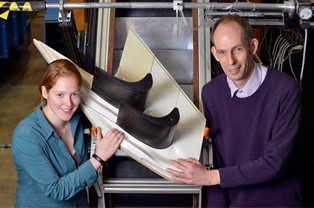
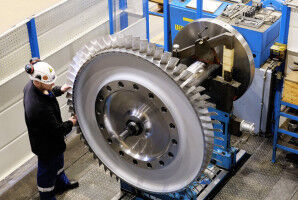
We use cookies to ensure that we give you the best experience on our website. You can change your cookie settings at any time. Otherwise, we'll assume you're OK to continue. Shaping the future of aviation More than 1,000 aircraft carrying passengers all over the world have more efficient engines, saving fuel and causing less pollution, as a result of turbine technology developed at Durham University. The University's partnership with Rolls-Royce, whose engines are fitted to planes including the world's largest airliner, the Airbus 380, is just one example of the benefits of the university's research that is being measured for the first time in a Government-backed exercise. More efficient gas, steam and wind turbines have also resulted from research by Durham University, which works in partnership with industry and other centres, such as the Offshore Renewable Energy Catapult, formerly the National Renewable Energy Centre (NAREC), based at Blyth in North East England. Rolls-Royce adopted a new shape for the turbine endwall - the inner edge of the blade, where it attaches to the spinning central rotor - for its Trent engines, which are fitted to more than 1,000 aircraft.
TO READ THIS ARTICLE, CREATE YOUR ACCOUNT
And extend your reading, free of charge and with no commitment.