SMILE space mission passes first hurdle
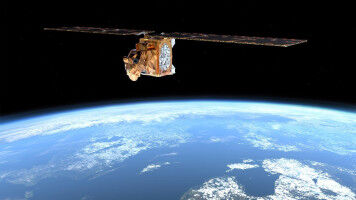
A space mission called SMILE (Solar Wind Magnetosphere Ionosphere Link Explorer) which is jointly led by UCL and the Chinese National Space Science Center has received the go-ahead for an initial study phase this summer by the European Space Agency (ESA) and the Chinese Academy of Sciences (CAS). SMILE aims to understand how the Sun controls the Earth's magnetic environment and space weather. If the initial studies are successful, the mission could be given a final decision of implementation in November 2015, with the launch expected at the end of 2021. If launched, SMILE will monitor the solar wind and its effects on Earth for three years and will help scientists understand the chain of events leading to the disruption of satellites, power grids and radio. The information collected on the mission could be used to predict and mitigate the impact of future solar storms. SMILE differs from previous missions looking at space weather as it will study what happens globally in the Earth's magnetosphere, as well as the ionosphere and aurora which are closer to Earth. This will provide more detailed information which will hopefully enable scientists to reach a complete understanding of how the Sun influences events on Earth by interacting with its magnetic environment.