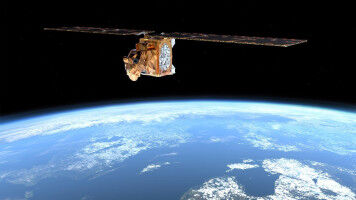
SMOS: the global success story continues
ESA's water mission is shedding new light on the meandering Gulf Stream, just one of the SMOS satellite's numerous achievements. Launched in 2009, ESA's Soil Moisture and Ocean Salinity satellite has been helping us to understand the water cycle. Over the past three years it has been providing more accurate information on global soil moisture and ocean salinity. New results unveiled today in Spain show that SMOS is now providing new insights into the movement of the Gulf Stream - one of the most intensely studied current systems. Originating in the Caribbean and flowing towards the North Atlantic, the current plays an important role in the transfer of heat and salt, influencing the climate of North America's east coast and Europe's west coast. Salinity observations from SMOS show that warm, salty water being carried north by the Gulf Stream meets the colder, less-salty water transported southward along North America's east coast by the Labrador Current, mixing the water masses off Cape Hatteras. SMOS can distinguish between and follow the resulting eddies that are 'pinched off' from the current and form little parcels of warm and salty water in the Labrador Current, and the colder, fresher water in the Gulf Stream.