 Discover the manufacturing secrets of an electric razor
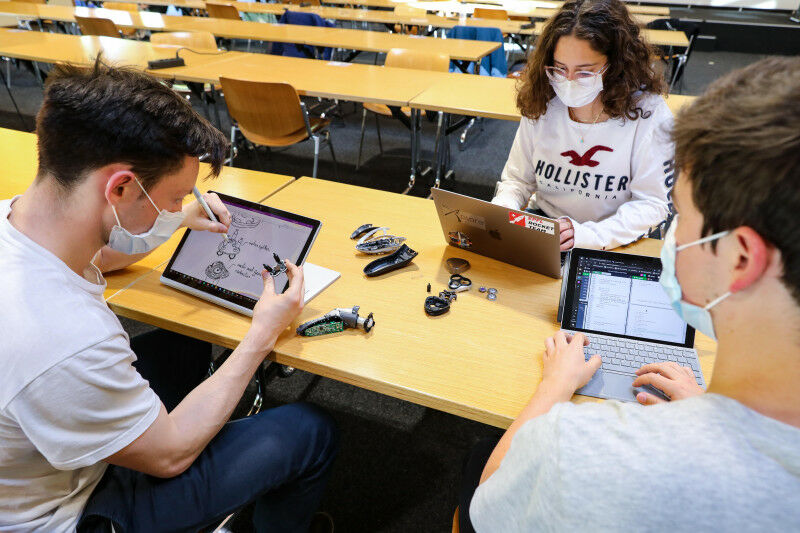
Discover the manufacturing secrets of an electric razor © Alain Herzog 2021 EPFL Sometimes you have to take things apart - separate out their components, dig into the nuts and bolts and test various hypotheses - to figure out how they work. That's the premise behind the reverse-engineering class at EPFL, where students deconstruct everyday objects to better understand the mechanisms involved. Every year, some 150 third-year Bachelor's students in microengineering get an opportunity to directly link the theory they learned in class to real-world objects through a fun reverse-engineering class that EPFL introduced in 2018. Students form groups and then select an everyday object - like an electric razor, a fan, an electric kettle, a fishing reel, a toaster or a bicycle derailleur - and take it apart completely, investigating its various parts, how it was built, how components are connected together, and what each one does. That lets them understand step by step how the object was manufactured. This kind of hands-on approach is very effective for teaching, as Yves Bellouard - the professor who created the class - is happy to note. "Students are eager for classes that involve concrete applications," he says.
TO READ THIS ARTICLE, CREATE YOUR ACCOUNT
And extend your reading, free of charge and with no commitment.
Your Benefits
- Access to all content
- Receive newsmails for news and jobs
- Post ads