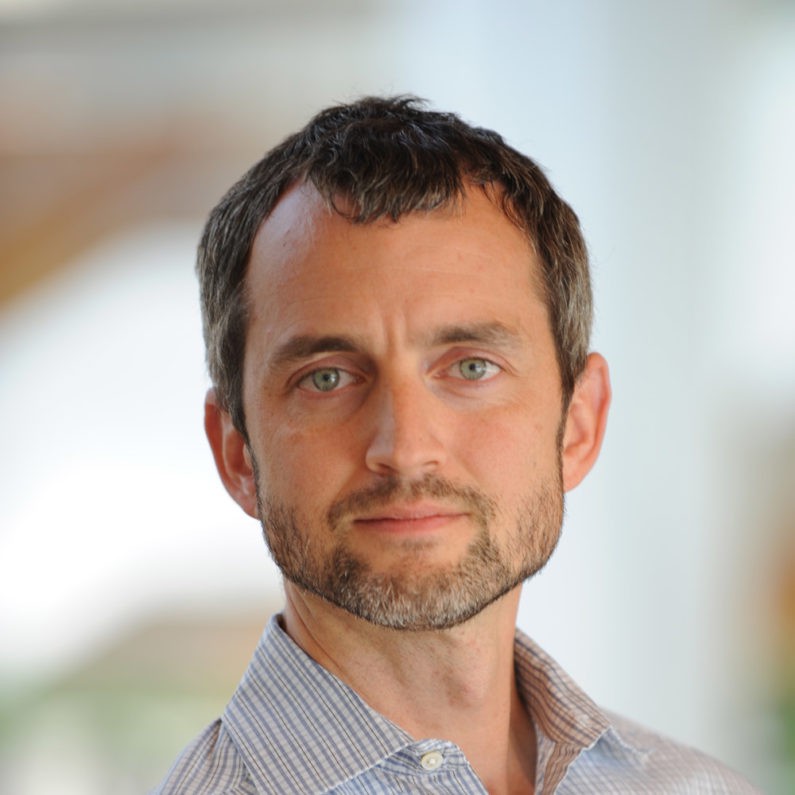
Matthew Gentzkow (Image credit: Courtesy SIEPR)
Fabricated stories favoring Donald Trump were shared a total of 30 million times, nearly quadruple the number of pro-Hillary Clinton shares leading up to the election, according to Stanford economist Matthew Gentzkow. Even so, he and his co-author find that the most widely circulated hoaxes were seen by only a small fraction of Americans. Of all the heated debates surrounding the 2016 presidential race, the controversy over so-called 'fake news' and its potential impact on Donald Trump's victory has been among the fiercest. Now there's concrete data proposing that false news stories may not have been as persuasive and influential as is often suggested. But the economists behind the research do not conclude one way or the other whether fake news swayed the election. On Wednesday, economists Matthew Gentzkow of Stanford and Hunt Allcott of New York University released a study also showing that social media played a much smaller role in the election than some might think. 'A reader of our study could very reasonably say, based on our set of facts, that it is unlikely that fake news swayed the election,' said Gentzkow, an economics professor and senior fellow at the Stanford Institute for Economic Policy Research (SIEPR).
TO READ THIS ARTICLE, CREATE YOUR ACCOUNT
And extend your reading, free of charge and with no commitment.