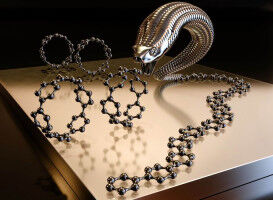
The research team used supercomputers to understand the breakdown of plastics.
Scientists from The Australian National University have used supercomputers to reveal how plastic items like the humble clothes peg can be designed to withstand the sun for longer. The researchers, led by Associate Professor Michelle Coote and PhD student Ms Anya Gryn'ova from the ARC Centre of Excellence for Free Radical Chemistry and Biotechnology at ANU, have used sophisticated quantum chemistry and supercomputers to model polymer degradation and discovered how to make better, more robust plastics. Their work will be published in an upcoming special edition of The Royal Society Chemistry journal, Organic & Biomolecular Chemistry . 'Although plastics have been manufactured for a long time, in this study we have uncovered critical information about creating longer lasting plastics which is important if we want to reduce the amount of plastic waste entering landfill every year,' said Associate Professor Coote. Historically scientists have thought that clothes pegs and other plastics left out in the sun become brittle and fail due to a process called autoxidation. Exposure to light or heat generates free radicals, which are reactive species that attack the polymeric chains in the plastic causing them to rearrange and break. Crucially, each 'broken' polymer chain is then thought to attack the next polymer chain, leading to a cascading failure that results in visible damage to the plastic.
TO READ THIS ARTICLE, CREATE YOUR ACCOUNT
And extend your reading, free of charge and with no commitment.