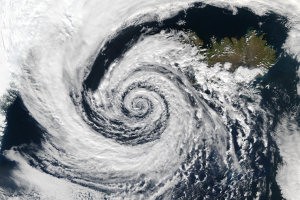
The eye of the storm (credit NASA Rapid Response)
Given the UK's obsession with the weather, it would seem obvious that the basic understanding of how low pressure systems evolve has been known for a long time. Instead, some of the biggest storms in the UK's history, such as the Great Storm of October 1987, did not fit this basic understanding. With groundbreaking research, David Schultz, from The University of Manchester believes the way we learn about the weather is wrong and has been wrong for 90 years. Writing in the journal Bulletin of the American Meteorological Society , Schultz, along with his colleague Professor Geraint Vaughan, has worked out that the traditional model for how low pressure systems evolve is deeply flawed. The model, used since the 1920s and devised by Norwegian meteorologists, is that when a storm occludes (evolves), it will automatically begin to weaken and pose little danger of severe weather. However, argues Schultz, this is not the case - occluded storms may well contain strong winds and regions of heavy precipitation. Naturally, many in the public recognize that.
TO READ THIS ARTICLE, CREATE YOUR ACCOUNT
And extend your reading, free of charge and with no commitment.