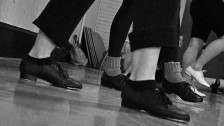
Tapping Away Credit: Sam Fan (Flickr Creative Commons)
Tap dancing reminds cinema of its origins in the turn-of the-century world of vaudeville, circus and carnival." - —Professor Steven Connor Tap dance is a mesmerising feature of much early sound cinema. Think Ginger Rogers and Fred Astaire, dapper suits and swirling skirts. Tap is a form obsessed not just by style but also by speed with the most talented performers capable of footwork that's dizzyingly fast. In 1946 American tap queen Ann Miller challenged an expert typist to a public display of percussive rapidity, out-tapping her opponent at 500 taps per minute. But the world record for tap-speed is held by the English star Roy Castle, who in 1973 achieved an awesome 1,400 taps per minute. The movements of tap dancers are strangely inhuman and almost robotic, the rhythmic taps of their steel and wood clad feet echoing the automated ticking of clocks, the clicking of morse code, the thrum-thrum of sewing machines and the purr of celluloid film spooling through a projector in the glowing darkness.
TO READ THIS ARTICLE, CREATE YOUR ACCOUNT
And extend your reading, free of charge and with no commitment.