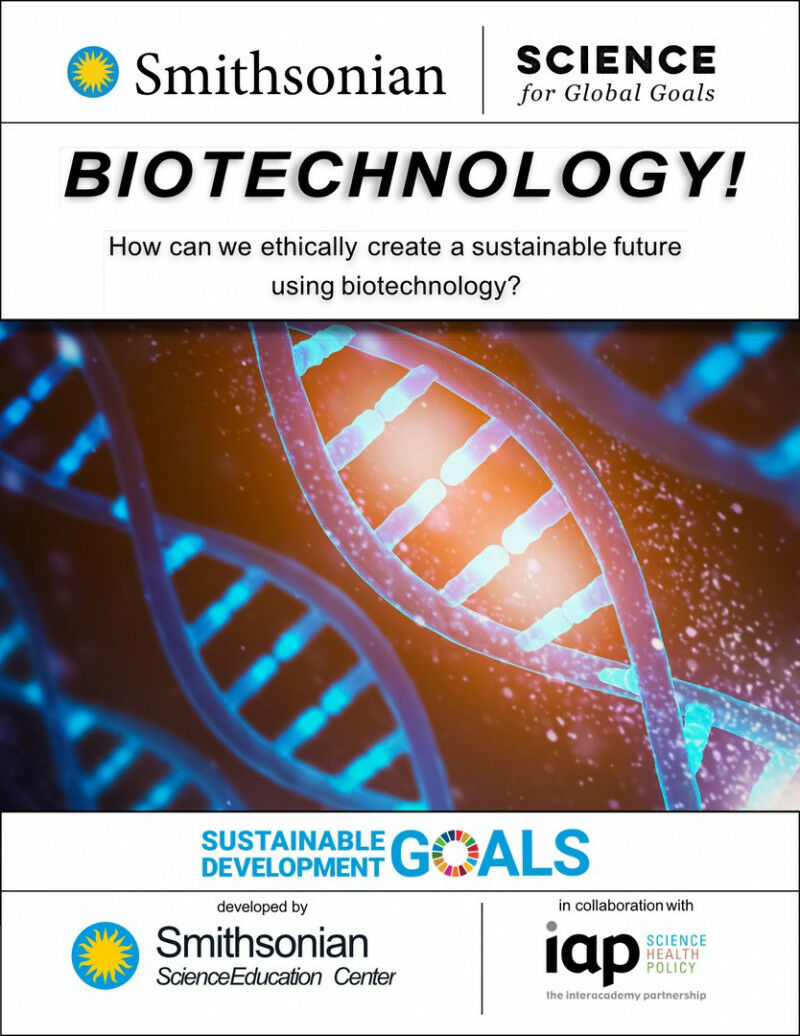
 Cover page
Cover page © Source: Smithsonian Science Education Center All rights reserved! - How can we use biotechnology to create a sustainable future in an ethical way? This question is addressed in teaching materials for schoolchildren produced by the Smithsonian Science Education Center in the USA. Agricultural economist Matin Qaim from the Center for Development Research (ZEF) at the University of Bonn is involved with the chapter on "Biotechnology and Food Systems". The information in English is a freely available community research guide developed by the Smithsonian Science Education Center (SSEC) in collaboration with the InterAcademy Partnership as part of the Smithsonian Science for Global Goals project. These Smithsonian Science for Global Goals Community Research Guides use the United Nations Sustainable Development Goals (SDGs) as a framework to focus on sustainable actions defined and implemented by students. The topic of biotechnology was prepared for students aged 11 to 18. In the guide, young people explore the question, "How can we use biotechnology to create a sustainable future in an ethical way?" They learn more about the potential of biotechnology while considering how best to manage risks and concerns. Using the guide, young people become action researchers who identify and help solve problems in their community.
TO READ THIS ARTICLE, CREATE YOUR ACCOUNT
And extend your reading, free of charge and with no commitment.
Your Benefits
- Access to all content
- Receive newsmails for news and jobs
- Post ads