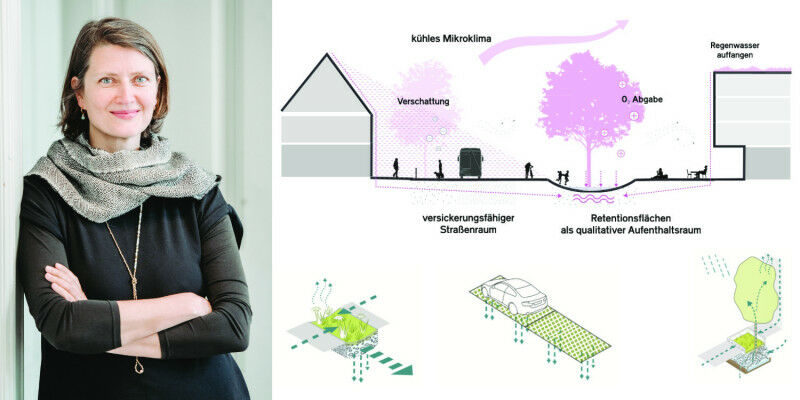
In her research project PeriSponge, Eva Schwab from the Institute of Urbanism develops methods and ideal-typical procedures with which municipalities can minimise sealing in existing and future neighbourhoods. (Image source: Fotogenia/PeriSponge)
In her research project PeriSponge, Eva Schwab from the Institute of Urbanism develops methods and ideal-typical procedures with which municipalities can minimise sealing in existing and future neighbourhoods. (Image source: Fotogenia/PeriSponge) By Philipp Jarke - In the PeriSponge project, a team led by Eva Schwab from the Institute of Urbanism is developing an evidence-based toolbox that municipalities can use to minimise surface sealing and thus the risk of flooding. Despite all the initiatives and debates, land use in Austria continues to rise almost constantly. Last year it was twelve hectares - per day. Almost half of this was sealed, i.e. built over, tarmacked or paved. This corresponds to eight football fields, which can heat up to 50 degrees Celsius in summer and where rain cannot seep into the ground. Such sealed surfaces lead to heat islands and increase the risk of flooding during heavy rainfall.
TO READ THIS ARTICLE, CREATE YOUR ACCOUNT
And extend your reading, free of charge and with no commitment.