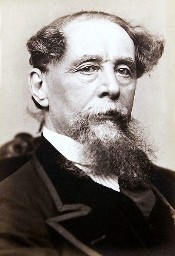
Charles Dickens
He looked at the technological revolution unfolding around him and recognized the possibility for new kinds of social networks, and the insight catapulted him to the pinnacle of his field and changed popular culture forever. Mark Zuckerberg? The founder of Match.com? Think further back — way back, urges a UCLA authority on the life and work of Charles Dickens. In a forthcoming book, Jonathan Grossman ascribes key characteristics of Dickens' work to the 19th-century author's appreciation of the implications of Victorian innovations in high-speed, global passenger transport, including new perceptions of time, space and community. Through such novels as "The Old Curiosity Shop," "Little Dorrit," "A Tale of Two Cities" and "Great Expectations," Dickens helped his readers synthesize and understand the historic shift engulfing them, Grossman contends in "Charles Dickens's Networks: Public Transport and the Novel." "Dickens grasped the promise that the public transport revolution held in networking people together," said Grossman, an associate professor of English at UCLA. "He cheered this revolution. He helped us to imagine and understand a networked world. He also lamented the tragedies that this networking wrought." From Dickens' famously intricate plots, to his galley of diverse characters whose fates intersect, to his description of synchronous events occurring over long distances, Grossman sees the indelible influence of key 19th-century innovations in stagecoach, rail and ocean transport in the author's 15 novels and numerous essays and short stories.
TO READ THIS ARTICLE, CREATE YOUR ACCOUNT
And extend your reading, free of charge and with no commitment.