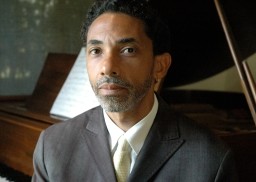
Robin D. G. Kelly is the Gary B. Nash of American History at UCLA.
At a time when the music of South African jazz great Hugh Masekela is more likely to be heard in an elevator than a bootleg recording, it's hard to imagine an era when combining jazz and African music would have been considered revolutionary. But a new book by a prominent UCLA historian revisits the period in the late 1950s and early 1960s when African musicians began to swing and American jazz artists turned to Africa in an attempt to nudge the art form beyond bebop. In "Africa Speaks, America Answers: Modern Jazz in Revolutionary Times" (Harvard University Press), Robin D. G. Kelley documents the struggles faced by four little known trailblazers who dared to mix African influences and jazz: the late Ghanaian drummer Guy Warren; the American pianist Randy Weston, who is now 85; the late American bassist and oud player Ahmed Abdul-Malik; and South African vocalist Sathima Bea Benjamin, now 75. "These were artists who were ahead of their time," Kelley said. "In the 1950s and 1960s, there were critics who said, 'You cannot mix apples and oranges, it dilutes the purity of African music or the purity of jazz.'" The holder of the Gary B. Nash Professorship in American History at UCLA, Kelley is a prominent historian of African-American culture and jazz in particular. He is the author of seven books, including the critically acclaimed 2009 biography "Thelonious Monk: The Life and Times of an American Original" (The Free Press).
TO READ THIS ARTICLE, CREATE YOUR ACCOUNT
And extend your reading, free of charge and with no commitment.