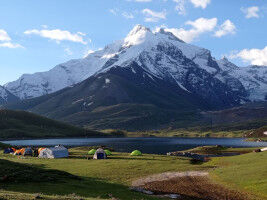
Under the volcano: The Eyjafjöll eruption
Professor Bill McGuire (Aon Benfield UCL Hazard Research Centre) discusses the eruption of the Eyjafjöll volcano in Iceland, which has sent a huge cloud of ash toward the UK and disrupted air traffic. ?The 1600m high Eyjafjöll volcano (also known as Eyjafjallajökull) is located in southern Iceland, immediately west of Katla volcano. Eyjafjöll is an elongated, ice-covered volcano topped by a 2.5km-wide summit caldera. The volcano appears to have been relatively inactive over the last 10,000 years, and the sole historical eruption, prior to this year, occurred in 1821. ?The current eruption started on 20 March 2010. Following a pause in activity, a new vent opened on 13 April generating a column of ash several kilometres high and causing melting of overlying glacier ice. This resulted in the formation of glacial outburst floods that closed roads and caused some structural damage.