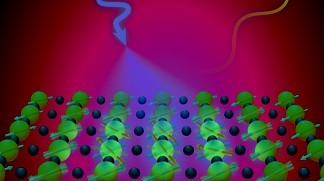
EPFL research in atomic scale magnetism could play a role in the development of new materials that could permit lossless electricity transmission. Might it one day be possible to transmit electricity from an offshore wind turbine to land-based users without any loss of current? Materials known as "high temperature" superconductors (even though they must be maintained at -140°C!), which can conduct electricity without any losses, were supposed to make this dream a reality. But over the past twenty-five years, scientists have not been able to make any progress in this area. Research being done in EPFL's Laboratory for Quantum Magnetism (LQM) could change that. Their study of magnetism at extremely small scales could give physicists a tool to use in their search for new superconducting materials. Studying a superthin layer There are some ceramics that are excellent insulators at room temperature but that become perfect conductors when submersed in liquid nitrogen. However, this phenomenon, known as "high temperature" superconductivity, is not at all well understood by physicists.
TO READ THIS ARTICLE, CREATE YOUR ACCOUNT
And extend your reading, free of charge and with no commitment.
Your Benefits
- Access to all content
- Receive newsmails for news and jobs
- Post ads