Watching religiously
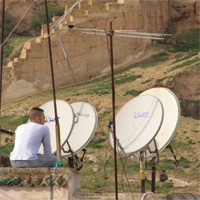
A new survey of the boom in religious broadcasting in the Middle East reveals how the small screen is becoming an increasingly important battlefield in the struggle for people's hearts and minds. The report, by the Cambridge Arab Media project and Cambridge University's Centre of Islamic Studies, follows a conference earlier this year and provides an overview of the little-studied but sprawling network of satellite television stations now operating in the region. Since the 1980s, the number of satellite channels in Middle Eastern countries has burgeoned, from none to almost 500. In turn, the range of religious programmes available to viewers has become far wider than ever before, offering them alternative ideas not just about faith, but society as a whole. Researchers believe that television is, as a result, becoming an evermore influential means of social engineering in the Middle East. While a handful of the channels in question, such as al-Jazeera, are internationally recognised, the majority address specific, niche audiences and are unknown to the vast majority of Westerners. The report compiles the findings and observations of numerous academics, first presented at the Cambridge conference in January.
TO READ THIS ARTICLE, CREATE YOUR ACCOUNT
And extend your reading, free of charge and with no commitment.