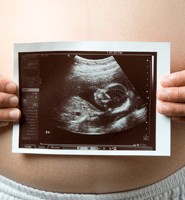
While the availability of ultrasound scans plays a crucial role in enabling girl abortion, it also plays a positive role in improving pre-natal care. The use of ultrasound for sex-selective abortion touches on many of the dilemmas of modern times, including the ethics of scientific progress. It also raises wider issues of gender inequality, human rights and freedom of choice.
Press release issued 10 February 2011 The widespread availability of ultrasound scans in India is giving rise to abortions of female foetuses on an unprecedented scale, according to new research by Professor Sonia Bhalotra from the University's Centre for Market and Public Organisation. Her study of 'sex-selective' abortion in India reveals that nearly half a million girls are aborted each year, which is more than the number of girls born annually in Britain. The practice is concentrated among relatively rich and educated Hindu families. According to Professor Bhalotra, this is consistent with 'modern' women being more receptive to new technologies and their wanting to have fewer children. She also suggests that Muslim women may have a stronger abhorrence of abortion. Before this study, there was considerable anecdotal evidence of girl abortion in India, but no direct records of the practice. Using information on half a million births in India over more than three decades, this research identifies a dramatic decrease in the ratio of girls to boys being born after, and only after, the arrival of ultrasound machines in India.
TO READ THIS ARTICLE, CREATE YOUR ACCOUNT
And extend your reading, free of charge and with no commitment.