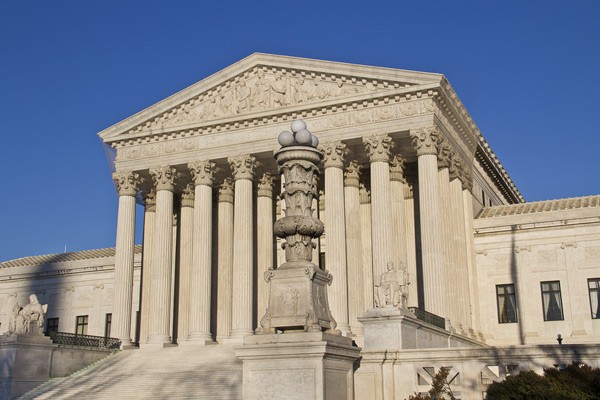
As the Supreme Court considers Fisher v. University of Texas , a so-called ’reverse discrimination’ case, Stanford researchers have studied which white people were most likely to say they were discriminated against because of their race.
Stanford Report, January 23, 2013 - Whites who perceive anti-white bias draw from different communities in different parts of the country: evangelical churches in the South, and the Republican Party elsewhere. With the affirmative action case Fisher v. University of Texas before the Supreme Court, "reverse discrimination" is back in the public eye. Perceptions of reverse discrimination, so-called because it involves bias against whites, rather than against minorities, are not new and have been building among American whites for decades. But the phenomenon is little studied. "We talk about whites who claim reverse discrimination a lot, but we don't often study them systematically," said Aliya Saperstein , assistant professor of sociology at Stanford. "The issue of reporting racial discrimination is such a loaded one. So, we were curious about who the white people were who would say out loud to a survey er that they had been treated unfairly because of their race.
TO READ THIS ARTICLE, CREATE YOUR ACCOUNT
And extend your reading, free of charge and with no commitment.