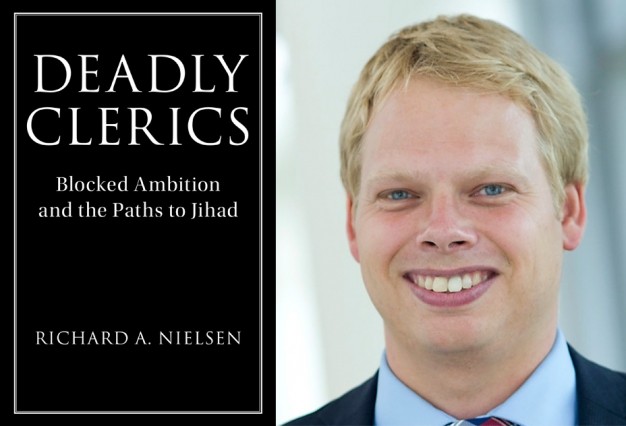
Richard Nielsen’s book, "Deadly Clerics: Blocked Ambition and the Paths to Jihad," finds a certain portion of Muslim clerics who end up advocating for jihad - war against Islam’s foes - started out as mainstream clerics looking for state-sponsored jobs where they could use their intellectual training, only to become unemployed, disenchanted, and radicalized.
What turns people into radical jihadist clerics' A new book by an MIT political scientist offers a new answer: thwarted career ambitions. More specifically, the book finds, a certain portion of Muslim clerics who end up advocating for jihad - war against Islam's foes - started out as mainstream clerics looking for state-sponsored jobs where they could use their intellectual training, only to become unemployed, disenchanted, and radicalized. "Frustration with circumstances can make people angry and lead them to political violence," says Richard Nielsen, an associate professor in MIT's Department of Political Science and author of a newly published book on the subject, based on years of original research. While that's a general truth explaining a number of forms of political radicalization, Nielsen's work specifically probes, in close detail, what happens to trained Muslim clerics, using his own on-the-ground observations and deep analysis of online texts clerics produce. Nielsen finds that about 10 percent of the clerics writing on the internet are jihadists, though he notes that clerics publishing online are not representative of all of Islam. But many of those who gain an audience this way, he has found, first failed to make a living in mainstream society. "If they don't have as many connections, they're at greater risk of not making good on the investment they put into their legal training, and at greater risk of becoming jihadists," Nielsen explains.
TO READ THIS ARTICLE, CREATE YOUR ACCOUNT
And extend your reading, free of charge and with no commitment.