


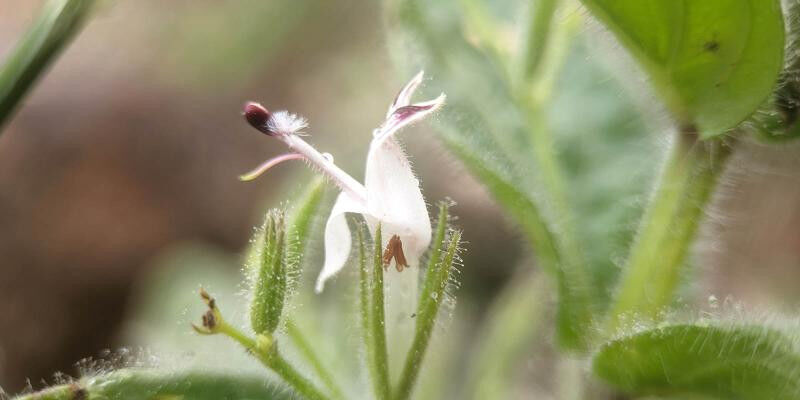
A study carried out under the direction of the University of Fribourg in collaboration with the University of Lausanne and the University of Geneva shows that the majority of food supplements based on Kalmegh (Andrographis paniculata) available in Switzerland are of poor quality, mislabeled and sometimes contaminated with toxic substances: The majority of Kalmegh (Andrographis paniculata)-based food supplements available in Switzerland are of poor quality, mislabeled and sometimes contaminated with toxic substances.
Since the beginning of the COVID-19 pandemic, sales of Andrographis paniculata-based food supplements marketed for the treatment of respiratory infections have risen sharply in Switzerland and elsewhere. As they are not registered as medicinal products, preparations based on this plant, which originates from India and Sri Lanka, are not subject to the strict quality controls to which pharmaceutical products are subject
Misleading labeling and frequent contamination
The researchers from the Universities of Fribourg, Lausanne and Geneva analyzed 40 products purchased in 13 countries, 27 of which were available online in Switzerland. Using state-of-the-art phytochemical analysis, they found that
- Only two products contained the amount of andrographolide (active ingredient) stated on the label.
- Twenty products were under- or overdosed.
- Three products purchased online contained toxic pollutants, namely mercury and banned pesticides (strychnine, butraline).
’These results show that many consumers buy products that are not what they claim to be - sometimes with health risks,’ explains Angélique Bourqui, pharmacist at the University of Fribourg and lead author. ’The qualitative difference between dietary supplements and authorized plant-based medicinal products is striking and reveals a regulatory gap that urgently needs to be closed
Weak regulation, increasing risks
Unlike phytopharmaceuticals, no clinical evidence of safety, efficacy or quality has to be provided for plant-based food supplements before they are placed on the market in Switzerland, Europe or the USA - and they are rarely checked afterwards.
The products purchased online showed the greatest problems, as three of them were contaminated with heavy metals or pesticides.
’Anyone who buys plant-based food supplements on the internet is taking a big risk,’ warns Prof. Pierre-Yves Rodondi, co-author and a general practitioner at the University of Fribourg.
’Without proper regulation and independent monitoring, consumers have no guarantee of what they are actually taking
Consequences for consumers and professionals
’’Natural’ does not always mean ’safe’,’ Prof. Rodondi points out. ’Underdosed products can be ineffective; contaminated products can be dangerous.
The researchers recommend several measures:
- Strengthening quality controls and introducing independent certification systems to ensure the composition and purity of products
- Balanced approach with a combination of better labeling, independent certification and public guidance to increase consumer safety without penalizing small producers
- Educating healthcare professionals so that they can ask patients about their consumption of food supplements, especially in the case of unexplained symptoms or suspected poisoning
’Our results do not mean that plant-based products should be avoided,’ concludes Prof. Rodondi. ’They underline the need for verifiable and trustworthy quality. Switzerland could play a pioneering role in transparency in this fast-growing sector.
Bourqui A, Morin H, Huber R, Csajka C, Podmore C, Wolfender JL, Ferreira EQ, Rodondi PY. Quality assessment of Andrographis paniculata products reveals significant labeling inaccuracies and contaminations. Swiss Med Wkly. 2025;155(12):4728. doi:10.57187/s.4728