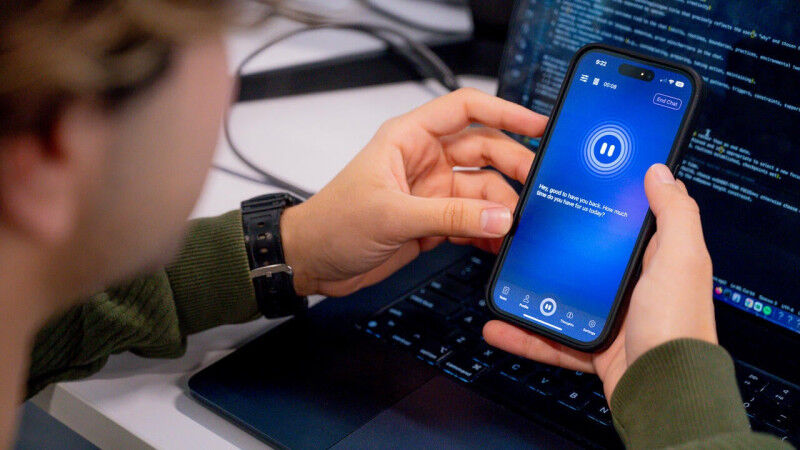
Modern health care support patients at crisis points: during a visit, around a procedure and after discharge. However, the gaps between care can fuel readmissions, emergencies and preventable decline. Velocity startup Doro is developing clinically guided AI tools to ensure that connection with patients continues long after appointments end, filling the gap health practitioners do not have the capacity to reach.
Rastin Rassoli (BCS ’25), co-founder of Doro, graduated from the University of Waterloo with a Bachelor of Computer Science, earning top averages in his double major in Psychology and his Artificial Intelligence Specialization. While at Waterloo, he explored the intersection of intelligent systems and human behaviour. Rassoli is now collaborating with Dr. Allison Kelly, professor in the Department of Psychology, Dr. Helen Chen, professor and director of the Professional Practice Centre in Health Systems at Waterloo, and a multidisciplinary team to build this continuity of care solutions for hospitals.
Many patients, says Chen, are "silently suffering" during the gaps between appointments. Disruptions in routine care can lead to more complications and worsening systems for people living with chronic illness, driving higher rates of emergency visits.
Doro has a proprietary AI system built specifically for health and mental health integrations, designed to operate in the margins of care. Before appointments, the system analyzes patient-reported data such as changes in symptoms, mood and day-to-day functions helping the patient and clinician gain a more accurate picture of well-being.
It can also guide patients through safe, evidence-based steps to help manage stress and anxiety before they escalate into more serious mental health challenges. Between visits, it maintains steady contact for users to feel more in control of their thoughts, emotions and daily life. "They should not go from 24/7 support to nothing," Rassoli says. After discharge, the technology prevents an abrupt drop from full clinical support to nothing.
Purpose - built AI for the health - care sector
Rassoli and Chen are clear that general-purpose AI has no place in clinical care. Health AI must stay within defined limits.
"Technology like this must be purposefully designed and validated for clinical use," Chen says. "It should not replace care, but support people between consultations with tools that are trained for that specific purpose and used safely."
When AI is embedded thoughtfully into clinical workflows, it will support everyone. AI tools can strengthen - not replace - the relationships at the core of quality care.
Putting i t’into practice
Doro is currently partnering with hospital systems across Canada and the United States to explore how an AI layer can strengthen post-discharge care, where some of the most critical gaps in continuity occur. The first days and weeks after discharge are often the most fragile: anxiety is high, adherence can drop, symptoms can return and early warning signs are easy to miss.
Doro’s initial focus is on areas where these risks are especially acute, including addiction and behavioural rehabilitation, Parkinson’s care and patients at elevated suicide risk. Through research and pilot work, the goal is to evaluate whether regular automated touchpoints can help monitor recovery, surface concerns earlier and reduce avoidable readmissions.
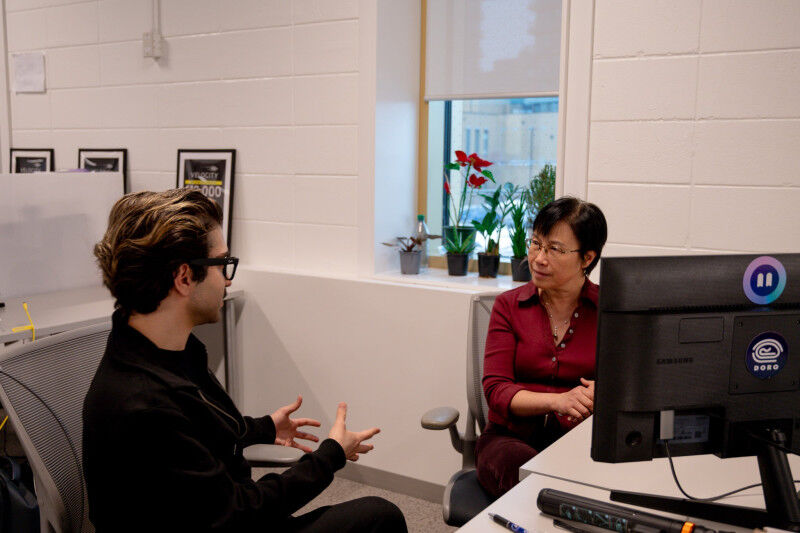
Chen points out that once patients leave the hospital, clinicians often lose visibility into their day-to-day experience. "Technology like this can capture those moments between visits and help provide a more realistic picture of how patients are doing."
The team knows stakes are high, running vigorous human review alongside large-scale automated testing. Each tool is evaluated externally before reaching a patient. Privacy protections are built in from the start.
While Rassoli and Chen emphasize the importance of minimizing risk when developing critical tools like Doro AI to support health practitioners, they acknowledge that, as with any technology or treatment, risk cannot be eliminated entirely and must be carefully mana ged through strong safeguards for patient safety and privacy.
Doro’s development model mirrors its clinical philosophy: collaborative and grounded. In 2024, Doro was deployed at Waterloo’s Campus Wellness and in 30 mental health clinics across Ontario and Alberta. This breakthrough in student care was supported by Goldi Gill, the previous executive director of Campus Wellness.
Today, the startup continues to work closely with Waterloo’s network, bringing together expertise in health systems, psychology and technology. This interdisciplinary collaboration shapes every stage of development. Rassoli says it is essential, not supplemental.
"We could not exist without the University or Velocity," he adds.
Ongoing Doro projects supported by Chen and Kelly are funded in part by Mitacs , strengthening the pathway from research to real-world clinical impact.
The last mile
In Canada, people receive little to no support between doctor visits, even though those days and weeks often matter most for their long-term health. Smart AI tools could help fill that gap. The work is still early, and the team is cautious. But with careful design, strict safety standards and continued clinical partnerships, Doro is building toward something the health system has long needed: care that does not stop when the appointment ends.