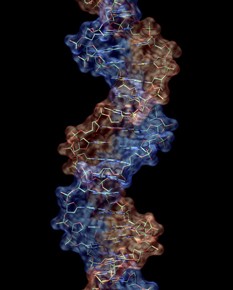
A rendered image of DNA. Image:
A failure to use large international sample groups when searching for the genetic basis of common diseases is contributing to a lack of knowledge about the true frequency of illnesses across populations, according to a researcher from The Australian National University. Professor Julio Licinio, the Director of The John Curtin School of Medical Research at ANU, is one of a team of researchers analysing data from the Human Haplotype Mapping (HapMap) project. In a new study the researchers reveal the results of a study that searched for a map of genetic variations that may be the basis of disease across a broad sample from around the world. They found that even when drawing on large sample groups, that there was a high frequency of rare genetic variants, which will make it necessary to study large numbers of people in order to better understand the genetics of common disorders. This suggests, they say, that is better to simply start afresh with new genetic research, rather than use that which is based on small sample groups. ?The results from looking at this broad international group has shown that statistical correlations between rare genetic variants discovered by sequencing and common sequence variations is low and even their imputation can be practically difficult when the reference panel isn't large enough,' said Professor Licinio.
TO READ THIS ARTICLE, CREATE YOUR ACCOUNT
And extend your reading, free of charge and with no commitment.