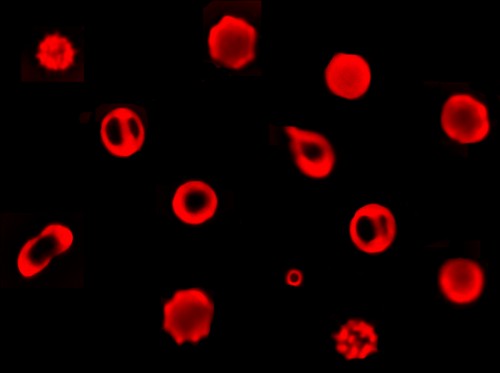
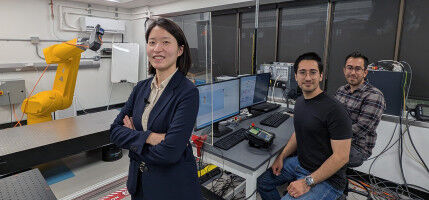
A research team led by electrical and computer engineering professor Gabriel Popescu used a novel measurement technique called diffraction phase microscopy to reveal the mechanics of red blood cells.
CHAMPAIGN, Ill. Thanks to an interdisciplinary team of researchers, scientists now have a more complete understanding of one of the human body's most vital structures: the red blood cell. Led by University of Illinois electrical and computer engineering professor Gabriel Popescu, the team developed a model that could lead to breakthroughs in screening and treatment of blood-cell-morphology diseases, such as malaria and sickle-cell disease. The group published its findings in the Proceedings of the National Academy of Sciences. Red blood cells (RBCs) are unique in structure - a doughnut-shaped disc full of the oxygen-carrying molecule hemoglobin but none of the intracellular structures of other cells, not even DNA. In circulation, RBCs must contort to squeeze through capillaries half their diameter. Their flexibility and resilience come from their membrane structure, which couples a typical lipid bilayer with an underlying matrix of protein.
TO READ THIS ARTICLE, CREATE YOUR ACCOUNT
And extend your reading, free of charge and with no commitment.