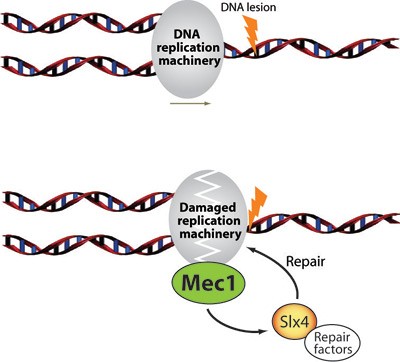
To replicate the genome, the replication machinery must travel the full extent of the genomic DNA. But the machinery often stalls and is damaged by encountering DNA lesions or replication blocks along the way. Smolka and colleagues discovered how the Mec1 protein mediates the repair and restart of the replication machinery, so cells can complete DNA replication.
Like a scout that runs ahead to spot signs of damage or danger, a protein in yeast safeguards the yeast cells' genome during replication - a process vulnerable to errors when DNA is copied - according to new Cornell research. Researchers from Weill Institute for Cell and Molecular Biology have discovered how a protein called Mec1 plays the role of "guardian of the genome," explained Marcus Smolka, assistant professor of molecular biology and genetics. The findings are detailed in the July 30 edition of the journal Molecular Cell. Previous studies have shown that cells lacking Mec1 accumulate damaged DNA and become more sensitive to agents that interfere with replication. The researchers report that the Mec1 protein monitors and repairs the machinery responsible for replicating the DNA. At times, when DNA becomes damaged, the replication machinery can actually detach from the DNA - like a train coming off a track - but Mec1 coordinates the repair of the machinery and the DNA itself, allowing it to restart and continue replicating. "Mec1 organizes the cell's response against things that jeopardize the integrity of the genome," Smolka said.
TO READ THIS ARTICLE, CREATE YOUR ACCOUNT
And extend your reading, free of charge and with no commitment.