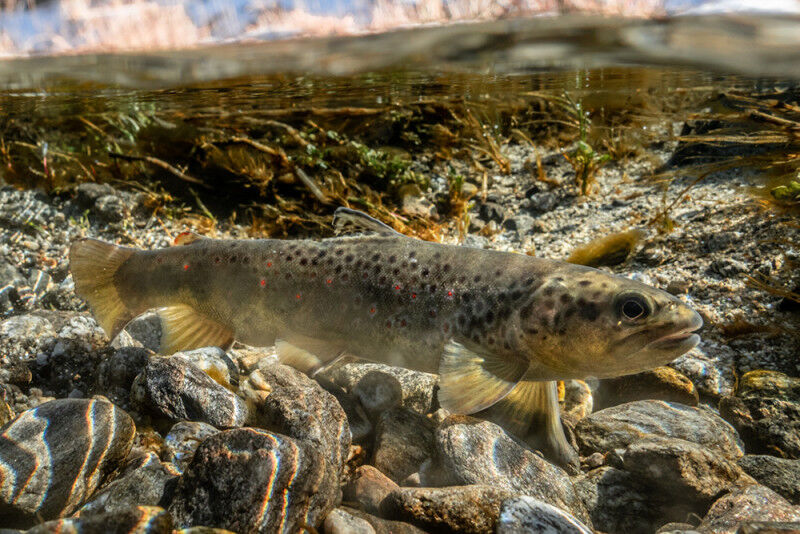
For the first time, researchers at the University of Bern have studied the immune system of brown trout cell by cell and compiled an overview of the gene activity in each cell. The study shows the diversity of the immune system of this ecologically important fish species, which is protected in Switzerland, and demonstrates that rearing conditions can leave measurable traces in the immune cells.
Every year, millions of fish are bred in captivity and then stocked into our waters to support natural populations. Their health is crucial - for fisheries, biodiversity and stable aquatic ecosystems. A well-functioning immune system is central for their health. However, under farming conditions, fish are exposed to environmental parameters that differ from those of natural populations in the wild: Different water, temperature and food conditions prevail, and the animals live together in significantly higher densities. A better understanding of the immune systems of fish and the influence of rearing conditions is central to minimizing disease risks for farmed and wild fish, and to improving husbandry conditions and stocking programs specifically.
A new study led by researchers from the Institute of Fish and Wildlife Health (FIWI) at the Vetsuisse Faculty of the University of Bern has examined the immune system of native brown trout at the cellular level for the first time in unprecedented detail. The researchers show that the rearing conditions leave measurable traces in the gene activity of the immune cells. This could affect how well prepared the fish’s immune system is for diseases. The results were recently published in the journal BMC Biology.
Over 83,000 individual immune cells analyzed
"Thanks to the high-performing computing infrastructure available at the University of Bern and expertise in state-of-the-art RNA sequencing technologies at the single cell level, we were able to analyze more than 83,000 immune cells from different trout individuals," explains James Ord, first author of the study and former postdoctoral researcher at the FIWI. "This first comprehensive mapping of immune cells opens up new possibilities to better understand and conduct targeted research on the immune system of fish," says Irene Adrian-Kalchhauser, last author of the study and head of the FIWI. The data obtained will form an important base for future studies on fish health, the evolution of the fish immune system and the development of new approaches in aquatic veterinary medicine. The latter is a specialized field in which FIWI has gained international recognition for its expertise. Heike Schmidt-Posthaus, co-supervisor of the study, heads this specialization area at FIWI.
Rearing conditions influence the immune system
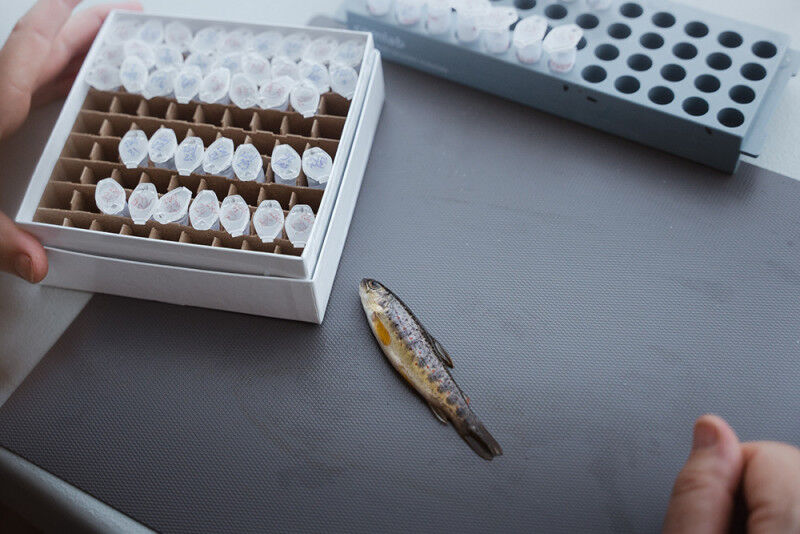
The researchers identified 34 different groups of immune cells, which significantly expands the previously known complexity of the trout immune system. In addition to the confirmation of already known immune cell types such as T cells, B cells and macrophages, the existence of a fish-specific immune cell type was also confirmed, which bears hallmarks of B cells and neutrophils simultaneously. A particularly noteworthy aspect of the study is the proven influence of the rearing conditions on the trout’s immune system. "Brown trout from the fish farm showed a significantly different pattern of activity in their immune cells than fish from the wild - certain genes were significantly more or less active. It was very surprising that such environmental differences were reflected at the immune cell level," explains Heike Schmidt-Posthaus. She adds: "Just one or two generations under controlled rearing conditions are enough to leave a measurable molecular ’fingerprint’ in the immune system. Whether this has a significant impact on the health and disease resistance of the animals is still to be investigated." These findings could explain why farmed fish are often less resistant to infection and environmental stress than wild fish.
Watching evolution in action
The high resolution of the data set also reveals exciting evolutionary biological details. Trout, like all salmonids, carry a particularly high number of duplicated genes in their genome. The published data set allows to watch how these duplicates take on new functions. There are duplicates in which both partners occur in exactly the same cell types. However, there are also gene pairs whose function has diverged - i.e. one partner occurs in one cell type, while the other occurs in a completely different cell type. "We can now directly observe the gene pairs in this so-called process of "neofunctionalization"," says Irene Adrian-Kalchhauser. "I would love to investigate in detail for each of these pairs how they differ and what this means for the immune system."
Significance of the results for nature conservation
Fared brown trout are released into natural waters around the world to support declining populations and conserve biodiversity. In view of climate change and the increasing destruction of habitats, it is important to accompany such stocking programs with modern molecular methods, says Adrian-Kalchhauser: "We need to better understand how rearing conditions influence the immune system so that these programs become more sustainable and effective." This includes, for example, promoting breeding practices that mimic natural conditions as closely as possible to increase the long-term success of nature and fisheries conservation measures. The next step will be to investigate how infections change the gene activity of immune cells. This research is currently still hampered by the ongoing shutdown of the FIWI’s experimental outdoor fish farm following the fire in summer 2025. "Our results provide an important framework for future studies on the function of the immune system, stocking practices and the evolution of vertebrate genomes", concludes Adrian-Kalchhauser.