Smell the love
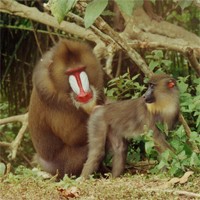
Mandrills can use body odour to identify potential mates, researchers have found, in a study which lends new support to the theory that humans also have the ability to "sniff out" suitable partners. The findings, which are reported by an international team of scientists in a paper today (Wednesday, 4 August), suggest that scent and smell play a far more pivotal role in primates' mate selection than previously thought. Researchers also found that mandrills can use odour to identify members of the same family or kin group, thereby avoiding the potentially devastating genetic consequences of inbreeding. They identified strong parallels between the specific chemical compounds that determine a mandrill's individual scent, and the pattern of their "major histocompatibility complex" or "MHC" genes. These genes are known to play an important part in immunity, but also in mate choice for both humans and mandrills. In each case individuals appear to seek out partners with a different MHC pattern to their own on an "opposites attract" basis, resulting in greater diversity of immune response in the offspring they produce. Scientists had also speculated that primates might be able to identify different MHC genotypes through smell, but no explicit link had been found - until now.
TO READ THIS ARTICLE, CREATE YOUR ACCOUNT
And extend your reading, free of charge and with no commitment.