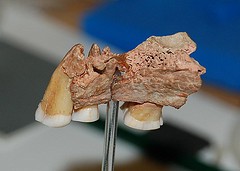
A photograph of the maxilla including three teeth, of the earliest known modern human in Europe, discovered during excavations at Kent's Cavern, Devon, England, in 1927.
UNIVERSITY PARK, Pa. A piece of jawbone excavated from a prehistoric cave in England is the earliest evidence for modern humans in Europe, according to an international team of scientists. The bone first was believed to be about 35,000 years old, but the new research study shows it to be significantly older - between 41,000 and 44,000 years old, according to the findings that will be published . The new dating of the bone is expected to help scientists pin down how quickly the modern humans spread across Europe during the last Ice Age. It also helps confirm the much-debated theory that early humans coexisted with Neanderthals. Beth Shapiro, the Shaffer Associate Professor of Biology at Penn State University and a member of the research team, explained that the fragment of maxilla - the upper jaw - containing three teeth was unearthed in 1927 in a prehistoric limestone cave called Kent's Cavern in southwestern England. Records from the original excavations, undertaken by the Torquay Natural History Society located in Devon, England, indicate that the jawbone was discovered 10 feet 6 inches beneath the surface and was sealed by stalagmite deposits.
TO READ THIS ARTICLE, CREATE YOUR ACCOUNT
And extend your reading, free of charge and with no commitment.