Researchers discover how to tame hammering droplets
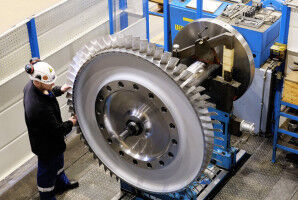
CAMBRIDGE, Mass. A water hammer can occur when a valve is suddenly opened or closed in a pipe carrying water or steam, causing a pressure wave to travel down the pipe with enough force that it can sometimes cause the pipes to burst. Now, new research shows that a similar effect takes places on a tiny scale whenever a droplet of water strikes a surface. MIT's Kripa Varanasi, co-author of a report on the new finding published this week in the journal Physical Review Letters , says the phenomenon could help engineers design more durable condensing surfaces, which are used in desalination plants and steam-based power plants. Other co-authors include MIT mechanical-engineering graduate students Hyuk-Min Kwon and Adam Paxson, and associate professor Neelesh Patankar of Northwestern University. Varanasi, the d'Arbeloff Assistant Professor of Mechanical Engineering, says the effect explains why blades used in power-plant turbines tend to degrade so rapidly and need to be replaced frequently, and could lead to the design of more durable turbines. Since about half of all electricity generated in the world comes from steam turbines - whether heated by coal, nuclear fuel, natural gas or petroleum - improving their longevity and efficiency could reduce the down time and increase the overall output for these plants, and thus help curb the world emissions of greenhouse gases.