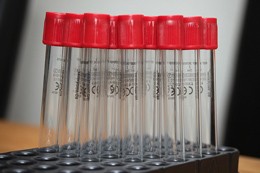
Photo by Hakan Dahlstrom, flickr:
Chemists from The Australian National University have discovered a new way that ageing-related diseases can progress, opening up new preventative and treatment possibilities for conditions such as heart disease and Alzheimer's disease. Led by Professor Chris Easton and Dr Dannon Stigers from the ARC Centre of Excellence for Free Radical Chemistry and Biotechnology at ANU, the researchers have used the test tube to simulate the living body, and revealed a new process through which ageing related diseases may develop. Their work has been published in a recent edition of The Royal Society Chemistry journal, Chemistry Communications . 'Remarkably the good old test tube has given us a fantastic window from which to look into the basic processes necessary for life and it has changed the way we think about how ageing related diseases develop,' said Dr Stigers. It had been assumed that lifestyle choices such as diet, exercise, and smoking caused some people to develop ageing related illnesses more rapidly than others. Poor lifestyle decisions increase exposure to free radicals which can damage proteins in the body leading to their accumulation and eventual disease. However, in this study the researchers were able to observe proteins being made with their building blocks already damaged, indicating there are two possible pathways to age-related disease development that can be exploited for future treatments.
TO READ THIS ARTICLE, CREATE YOUR ACCOUNT
And extend your reading, free of charge and with no commitment.