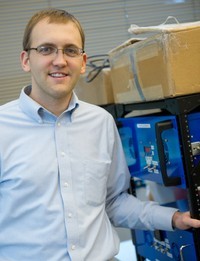
Marc Studer/UW Bothell Seth Lyman of UW Bothell displays the Dual Channel Oxidized Mercury System that gathered data on atmospheric mercury during National Center for Atmospheric Research flights in North America and Europe
Humans pump thousands of tons of vapor from the metallic element mercury into the atmosphere each year, and it can remain suspended for long periods before being changed into a form that is easily removed from the atmosphere. New research shows that the upper troposphere and lower stratosphere work to transform elemental mercury into oxidized mercury, which can easily be deposited into aquatic ecosystems and ultimately enter the food chain.
"The upper atmosphere is acting as a chemical reactor to make the mercury more able to be deposited to ecosystems,” said Seth Lyman, who did the work as a research assistant professor in science and technology at the University of Washington Bothell. Lyman, now with Utah State University's Energy Dynamics Laboratory, is lead author of a paper documenting the research published online Dec. 19 by. Daniel Jaffe, a science and technology professor at UW Bothell, is coauthor of the paper. The findings come from data gathered during research flights in October and November 2010 over North America and Europe by a National Center for Atmospheric Research aircraft.
TO READ THIS ARTICLE, CREATE YOUR ACCOUNT
And extend your reading, free of charge and with no commitment.