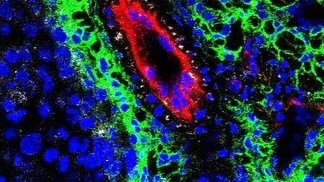
 Lymphatic cells (red) suurounded by lymphocytes (green)
Researchers at the EPFL have identified an important mechanism that could lead to the design of more effective cancer vaccines. Their discovery of a new-found role of the lymphatic system in tumour growth shows how tumours evade detection. Tumour cells present antigens or protein markers on their surfaces which make them identifiable to the host immune system. In the last decade, cancer vaccines have been designed that work by exposing the patient's immune cells to tumour-associated antigens and so priming them to kill cells that present those antigens. These have caused much excitement, not least because by acting so specifically on cancer cells, they could potentially eliminate the unpleasant side effects of chemo- and radiotherapy. Like soldiers protecting a fort - However, clinical trials of such vaccines have had a very low success rate to date, mainly because tumours have various mechanisms for evading detection by immune cells, even when those immune cells - called'T cells - have been primed to seek them out. Those mechanisms are, in general, poorly understood.
TO READ THIS ARTICLE, CREATE YOUR ACCOUNT
And extend your reading, free of charge and with no commitment.
Your Benefits
- Access to all content
- Receive newsmails for news and jobs
- Post ads