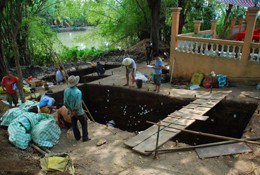
Photo by Marc Oxenham.
The possible discovery of the earliest toilet in Southern Vietnam could give up clues about how Southeast Asia evolved from a traditional hunter gatherer society to a farming community, new research from The Australian National University reveals. Marc Oxenham led a team of Australian and Vietnamese specialists on a seven-week archaeological excavation of a 3,300 to 3,700 year old Neolithic village site in Southern Vietnam earlier this year. 'Rach Nui' is a 5-metre tall ancient human-made mound surrounded by small tidal streams and mangrove swamps. The site is about 30km south of modern-day Ho Chi Minh City. The team believe they found Vietnam's earliest latrine when they stumbled across more than 30 preserved faeces belonging to humans and dogs that contained fish and shattered animal bones. "A detailed analysis of these will provide a wealth of information on both the diet of humans and dogs at Rach Nui, but also on the types of parasites each had to contend with," Oxenham said. Oxenham said about 4000 years ago, major economic, behavioural and genetic changes led to Southeast Asians swapping a lifestyle of hunting, gathering and fishing for farming.
TO READ THIS ARTICLE, CREATE YOUR ACCOUNT
And extend your reading, free of charge and with no commitment.