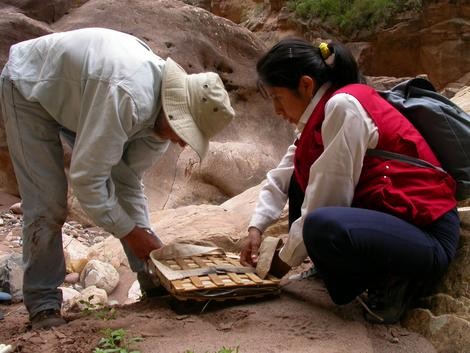
John Wood collecting plants in Bolivia. Photo: courtesy of Darwin Initiative.
More than 50% of the world's plant species have been discovered by 2% of plant collectors, scientists have found. With an estimated 15-30% of the world's flowering plants yet to be discovered, finding and recording new plant species is vital to our understanding of global biodiversity. The age of great botanical explorers, such as Sir Joseph Banks and Alexander von Humboldt, might appear to have passed. But the study, led by Oxford University scientists, found that modern botany has its own 'great plant hunters' - individuals whose experience and skills enable them to make a disproportionate contribution to the discovery of new plant species. A report of the research is published in this week's Proceedings of the Royal Society B . 'It seems that, even in the 21st Century, we need 'great' plant hunters who have the skills and experience to make the most efficient use of their time in the field,' said Robert Scotland of Oxford University's Department of Plant Sciences, who led the work. 'Whilst local specialists, citizen scientists, and students all have an invaluable contribution to make to botany, our research suggests that years of experience helps great hunters collect, not necessarily more specimens, but more of the important ones that go on to change our understanding of plant species,' Scotland adds.
TO READ THIS ARTICLE, CREATE YOUR ACCOUNT
And extend your reading, free of charge and with no commitment.