Pigeons’ homing skill not down to iron-rich beak cells
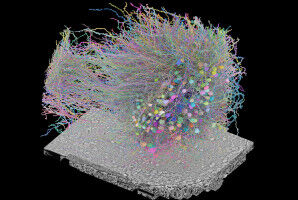
The theory that pigeons' famous skill at navigation is down to iron-rich nerve cells in their beaks has been disproved by a new study published in Nature. The study shows that iron-rich cells in the pigeon beak are in fact specialised white blood cells, called macrophages. This finding, which shatters the established dogma, puts the field back on course as the search for magnetic cells continues. "The mystery of how animals detect magnetic fields has just got more mysterious" said David Keays who led the study. Keays continued: "We had hoped to find magnetic nerve cells, but unexpectedly we found thousands of macrophages, each filled with tiny balls of iron." Macrophages are a type of white blood cell that play a vital role in defending against infection and re-cycling iron from red blood cells. They're unlikely to be involved in magnetic sensing as they are not excitable cells and cannot produce electrical signals which could be registered by neurons and therefore influence the pigeon's behaviour. We employed state-of-the-art imaging techniques to visualise and map the location of iron-filled cells in the pigeon beak - Mark Lythgoe Keays's lab, based at the Institute of Molecular Pathology in Vienna, worked together with Shaw from the University of Western Australia, and Drs Lythgoe and Riegler from the UCL Centre for Advanced Biomedical Imaging in London.