(Illustration by Michael Helfenbein)
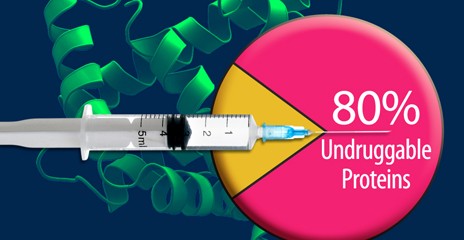
One of the most daunting challenges facing pharmaceutical scientists today are "undruggable proteins" - the approximately 80% of proteins involved in human disease that do not interact with current drugs. Yale researchers have identified a novel way to design drugs for these previously inaccessible proteins. The research was published July 26 in the journal Chemistry & Biology. "There is enormous interest in molecules that can both traverse cell membranes and inhibit interactions between proteins'," said Alanna Schepartz, the Milton Harris '29 Ph.D. Professor of Chemistry, director of the Yale Chemical Biology Institute and senior author of the paper. "Proteins and polypeptides are very good at inhibiting interactions between proteins in a test tube. We have identified a signal that helps these proteins enter the cell." Most drugs today are very small molecules and fit snuggly into relatively deep pockets in a protein, usually to inhibit a chemical reaction.
TO READ THIS ARTICLE, CREATE YOUR ACCOUNT
And extend your reading, free of charge and with no commitment.