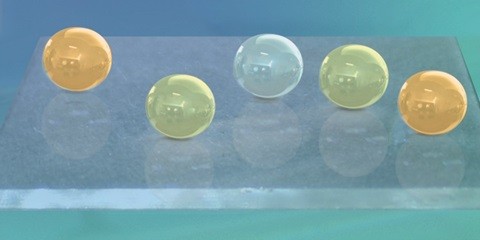
Oil droplets bead on a submerged glass surface. UAlberta researchers developed a way to make the glass repel oil, a discovery that could lead to new technologies for cleaning up oil spills and preventing harm to marine ecosystems.
UAlberta researchers show that a simple glass surface can be made to repel oil underwater. University of Alberta mechanical engineering researchers have shown that a simple glass surface can be made to repel oil underwater. This has huge implications for development of a chemical repellent technology for use in cleaning up oil spills. At the time of spills, marine flora and fauna may come into with the oil, wreaking major damage. Underwater oil-repellent technology can potentially prevent the toxic effect of oil on marine ecosystems. Lead U of A researcher Sushanta Mitra and his team members Prashant Waghmare and Siddhartha Das used surfactants, a key ingredient in soaps and detergents, as a way of making an underwater glass surface repel oil. The researchers propose that making use of this simple principle, large concentrations of surfactant can be added to oil-contaminated water, thereby ensuring that marine plants and animals exhibit similar oil-repellent characteristics and enabling them to overcome the deadly consequences of an oil spill.
TO READ THIS ARTICLE, CREATE YOUR ACCOUNT
And extend your reading, free of charge and with no commitment.