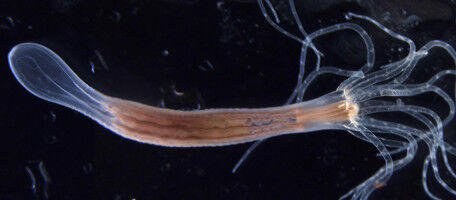
Hand painted images of hookworm heads (Ancylostoma ceylanicum) by Sarah Baxter.
Hookworms are a scourge of the world's poor, sucking blood from the intestines and causing anemia, lethargy, and developmental defects in nearly one billion people in developing countries. Hookworms, much smaller than a human hair, hatch in human feces, latch onto bare feet, travel to the blood stream and then to the lungs, where they are coughed up and swallowed. They burrow into gut for sustenance and lay eggs, which are excreted, starting the cycle again. Yale School of Medicine scientists have found a weakness in the worms - an anti-oxidant protein they secrete in order to survive in the stomach. In the July 25 issue of the journal Chemistry and Biology, Yorgo Modis, associate professor of molecular biophysics and biochemistry, and colleagues describe small molecules that can inhibit the function of the protein, providing basis of a possible diagnostic tool or therapeutic intervention.
TO READ THIS ARTICLE, CREATE YOUR ACCOUNT
And extend your reading, free of charge and with no commitment.