Our research has shown we can grip and move particles pretty much anywhere and along any path. The impressive thing is that it is completely non-contact, harmless and so ideal for moving delicate things, such as cells, around under a microscope.
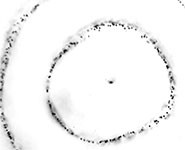
Academics have demonstrated for the first time that a "sonic lasso" can be used to grip microscopic objects, such as cells, and move them about. The research by academics at the University of Bristol's Department of Mechanical Engineering and the University of Dundee's Institute for Medical Science and Technology is published online in Applied Physics Letters . The researchers have shown experimentally how tiny particles, such as cells, or any small objects can be trapped by a spinning ultrasonic, or sonic, vortex. The vortex acts as a lasso that can be controlled and moved, catching the microscopic particles and enabling their careful positioning. This new technology makes possible applications such as assembly human tissue from a collection of cells and assembling nano materials. Bruce Drinkwater , Professor of Ultrasonics in the Department of Mechanical Engineering and who led the study, said: "Our research has shown we can grip and move particles pretty much anywhere and along any path. The impressive thing is that it is completely non-, harmless and so ideal for moving delicate things, such as cells, around under a microscope.
TO READ THIS ARTICLE, CREATE YOUR ACCOUNT
And extend your reading, free of charge and with no commitment.