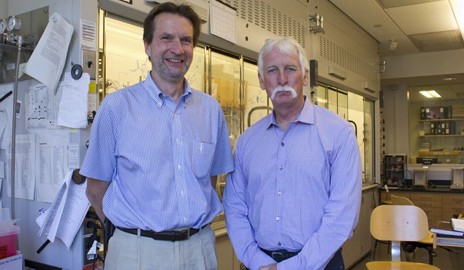
Richard Bucala and chemistry William Jorgensen are among the collaborators on research that may lead to drugs that limit damage to the heart from ischemia.
Research from three Yale laboratories - in the fields of immunobiology, chemistry, and cardiology - could lead to new drugs to reduce complications during cardiac surgery or heart attacks. If they pan out in human trials, the drugs would limit the detrimental impact of ischemia-restriction of blood flow-thereby cutting the degree of damage to the heart. The research appeared in the June online issue of Circulation. Dr. Richard Bucala, professor of medicine, pathology, and public health at Yale School of Medicine, led the study. "Whenever there's an invasive procedure," said Bucala, "you might be able to infuse this drug to limit damage." Chemistry professor William L. Jorgensen, and Dr. Lawrence H. Young, professor of cardiology and cellular and molecular physiology, collaborated on the research. Heart disease is the leading cause of death among men and women. During a heart attack or invasive therapeutic procedures such as coronary artery stent placement and coronary bypass surgery, prolonged ischemia can permanently damage the heart muscle.
TO READ THIS ARTICLE, CREATE YOUR ACCOUNT
And extend your reading, free of charge and with no commitment.