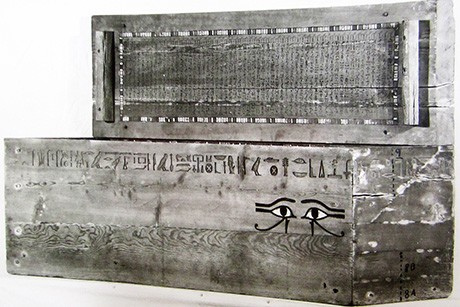
Provided
A handful of tree ring samples stored in an old cigar box have shed unexpected light on the ancient world, thanks to research by archaeologist Sturt Manning and collaborators at Cornell, Arizona, Chicago, Oxford and Vienna, forthcoming in the June issue of the Journal of Archaeological Science. The samples were taken from an Egyptian coffin; Manning also examined wood from funeral boats buried near the pyramid of Sesostris III. He used a technique called "dendro radiocarbon wiggle matching," which calibrates radiocarbon isotopes found in the sample tree rings with patterns known from other places in the world that have already identified chronologies, such as the long European oak chronology or the bristle cone pine trees of North America. Because the dating was so precise - plus or minus about 10 years - it helps confirm that the "higher" Egyptian chronology for the time period is correct, a question scholars have hotly debated. But the samples also showed a small, unusual anomaly following the year 2200 B.C. Paleoclimate research has suggested a major short-term arid event about this time. "This radiocarbon anomaly would be explained by a change in growing season, i.e., climate, dating to exactly this arid period of time," says Manning. "We're showing that radiocarbon and these archaeological objects can confirm and in some ways better date a key climate episode." That climate episode, says Manning, had major political implications.
TO READ THIS ARTICLE, CREATE YOUR ACCOUNT
And extend your reading, free of charge and with no commitment.